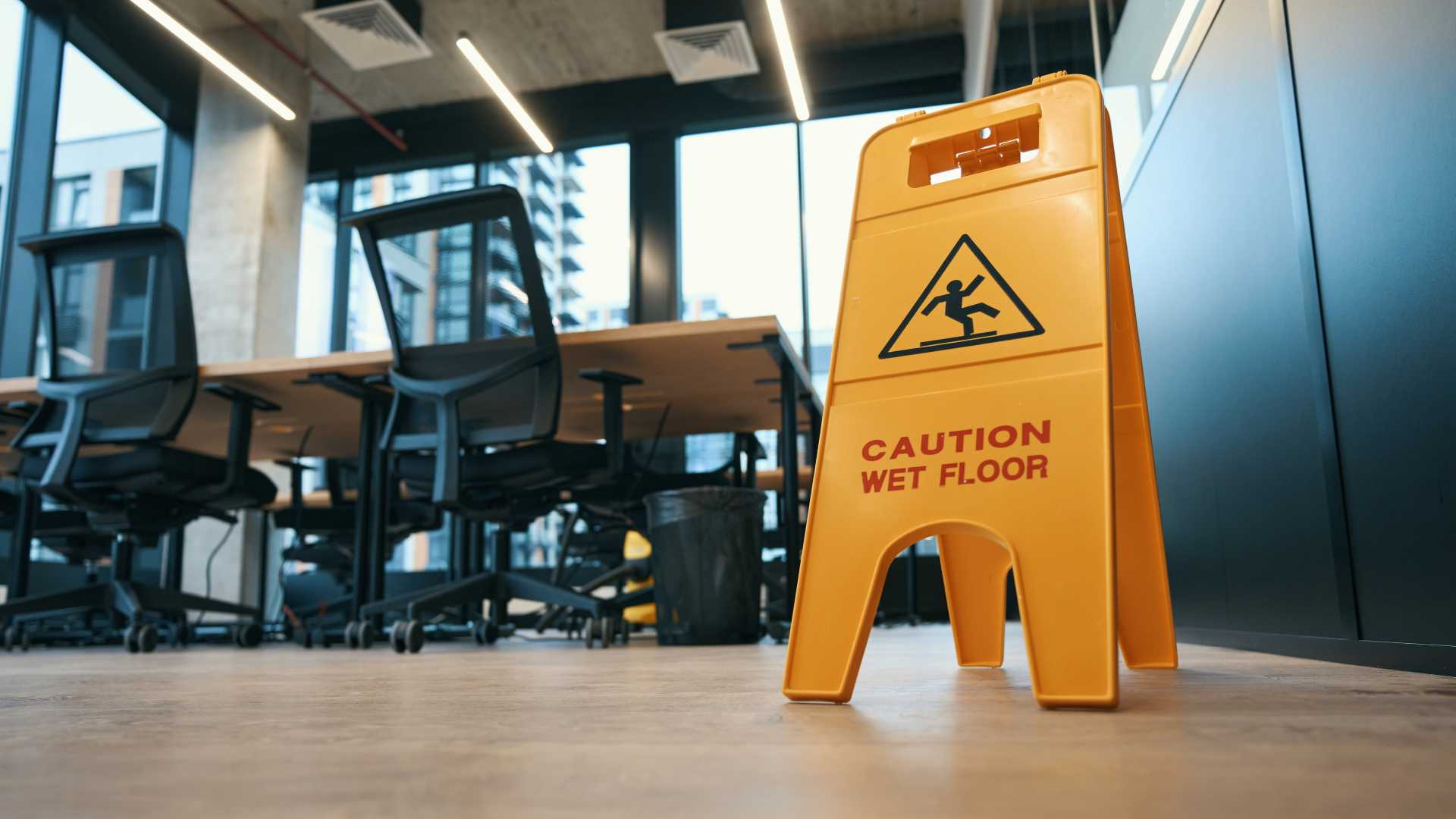
Most businesses have a rough sense of what building maintenance costs. What they’re less clear on is what poor building maintenance costs, and that figure is almost always much larger, and much less visible, than the budget line for keeping things properly maintained.
The costs of deferred maintenance, reactive-only approaches and compliance gaps don’t usually appear as a single line on a P&L. They show up in emergency invoices, insurance excess payments, lost productivity, expensive asset replacements, and, in the worst cases, legal liability.
They accumulate quietly, compounding over time, until a building owner or facilities manager is confronted with a problem that should have been prevented for a fraction of the cost of fixing it. Here’s a clear-eyed look at where those hidden costs come from, and what businesses can do to avoid them.
1
Emergency Repairs: The Premium You Pay for Doing Nothing
The most direct cost of poor maintenance is the emergency repair premium. When a system fails without warning, a boiler in January, a roof in a storm, a drainage blockage that backs up into the building, you’re not in a position to shop around. You need someone, you need them now, and you pay accordingly.
Emergency call-out rates are typically 50–100% higher than standard rates.
Parts procured urgently often carry a premium. And the collateral damage from an uncontrolled failure, water ingress damaging a ceiling, an electrical fault taking out IT equipment, a blocked drain flooding a production floor, can turn a manageable repair into a five-figure incident.
A planned maintenance programme doesn’t eliminate reactive work entirely; no maintenance regime does. But it dramatically reduces the frequency and severity of unplanned failures, and the cost difference over a three-to-five year period is usually substantial.
2
Shortened Asset Lifespans: Paying to Replace What You Could Have Kept
Commercial building systems, HVAC units, boilers, lifts, electrical installations, roof coverings, represent significant capital investment. Their expected service life assumes regular servicing, inspection and minor intervention. Without it, that lifespan shortens.
An HVAC system that should last 15–20 years with proper maintenance may fail at 8–10 years without it. A commercial boiler that should run reliably for 15 years may need replacing at 10. Across all the mechanical, electrical and fabric elements of a commercial building, the cumulative impact of premature replacement is significant.. and entirely avoidable.
The mathematics here are straightforward: the cost of planned maintenance over the life of an asset is almost always a fraction of the cost of early replacement. Businesses that defer maintenance to save money in the short term typically spend considerably more over the long term.
3
Energy Inefficiency: The Invisible Running Cost
Equipment that isn’t maintained doesn’t just fail earlier, it runs less efficiently right up until it fails. Dirty filters, poorly calibrated controls, degraded insulation and unchecked ductwork all translate directly into higher energy consumption.
In a commercial building, heating, ventilation and air conditioning can account for 40–60% of total energy use. An HVAC system running with a dirty filter may be consuming 10–15% more energy than a clean one. A boiler with scale build-up operates less efficiently and burns more fuel to produce the same output.
With energy costs at elevated levels, this is not a marginal issue. Businesses that maintain their mechanical and electrical systems properly, including regular filter changes, controls calibration, and boiler servicing, consistently run lower energy bills than those that don’t. The savings often contribute meaningfully to offsetting the cost of the maintenance programme itself.
4
Compliance Failures: Fines, Liability and the Consequences Nobody Plans For
Some building maintenance isn’t optional. Commercial property owners and occupiers have statutory obligations around fire safety, electrical installations, gas systems, asbestos management, water hygiene and more. Failure to meet these obligations isn’t just a technical non-compliance, it’s a legal and financial exposure that can be severe.
Consider the consequences of a fire safety failure. A business that cannot demonstrate that its fire alarm was tested, its fire doors were inspected, and its extinguishers were serviced may face enforcement action from the Fire and Rescue Service, significant fines, and, in the event of an incident, potentially unlimited liability. The Regulatory Reform (Fire Safety) Order 2005 places specific duties on the “Responsible Person” for any non-domestic premises, and enforcement is real.
The same applies to electrical safety. An Electrical Installation Condition Report (EICR) is required for most commercial premises on a rolling basis. Businesses that cannot produce current documentation face problems at lease renewal, in insurance claims, and in the event of an incident investigated by the Health and Safety Executive.
Compliance maintenance isn’t an overhead to be minimised, it’s a risk management function. The cost of getting it right is trivial compared to the cost of getting it wrong.
5
Productivity Loss: The Cost That Never Appears on an Invoice
When building systems fail, people can’t work properly. A broken heating system in winter isn’t just uncomfortable, it’s a productivity drag that affects every person in the building for as long as the fault persists. An office with poor ventilation has measurably lower cognitive performance. A building plagued by reactive failures generates a constant background noise of disruption that costs time, attention and morale.
These costs are real, but they rarely appear on a maintenance invoice. They’re absorbed invisibly by the business, in lost output, in missed deadlines, in the slow erosion of staff confidence in the organisation’s competence and investment in their environment.
The cumulative productivity cost of a poorly maintained building over several years can dwarf the cost of the maintenance programme that would have prevented it. The challenge is that it’s invisible until you look for it.
6
Insurance and Lease Implications
Poor maintenance has a habit of surfacing at the worst possible moments, at lease renewal, at insurance claim time, and in due diligence processes when a business is being bought or sold.
Insurers increasingly require evidence of regular maintenance and inspection for commercial property cover, particularly for high-value systems. A claim following a boiler failure in a building with no record of servicing may be disputed or settled at a reduced value. A lease renewal negotiation where the landlord’s surveyor finds a building in poor repair can result in a significant dilapidations liability.
Well-maintained buildings, with clear documentation of all inspection and servicing activity, avoid these complications. The paper trail that a good facilities management partner provides isn’t bureaucracy, it’s protection.
7
How to Break the Cycle
The good news is that the hidden costs of poor maintenance are entirely avoidable. The route out of a reactive, deteriorating maintenance situation is neither as disruptive nor as expensive as many building owners fear.
Start with an audit. Before committing to a maintenance programme, understand what you have. A professional survey of your premises, covering mechanical, electrical, building fabric and compliance status, gives you a clear picture of what needs attention and in what priority order.
Address the compliance gaps first. Statutory obligations around fire safety, electrical installations and gas systems need to be current. These are the items that carry the most significant risk if neglected, and they should be addressed as a priority.
Build a planned maintenance programme around your actual assets. A tailored PPM programme, based on your specific systems, their age and condition, and your operational requirements, is more cost-effective than a generic contract and more reliable than a reactive approach.
Keep the paperwork. Every inspection, every service, every reactive repair should be documented. This isn’t just good practice, it’s essential for compliance purposes, insurance cover and asset management.
Choose a partner you can rely on. The value of a planned maintenance programme is only as good as the company delivering it. Look for direct delivery, clear accountability, and a track record with buildings like yours.
8
How EZI Installs Can Help
EZI Installs works with commercial businesses across Essex to put in place maintenance programmes that are practical, compliant and genuinely cost-effective. We start with an honest assessment of where your building is now, and build a plan that addresses the gaps without unnecessary cost.
Our planned maintenance contracts cover mechanical and electrical systems, fire safety compliance, building fabric and more. Our responsive team is available when the unexpected happens. And our fit-out capability means that when your premises need more than maintenance, a refresh, an upgrade, a reconfiguration.. we can deliver that too.
If you’re concerned that your building maintenance isn’t where it should be, the best time to address it is before something goes wrong. Get in touch with the EZI Installs team for a free, no-obligation survey of your premises and an honest conversation about your options.
Ready to Reduce the Hidden Cost of Poor Maintenance?
If you’re concerned that your building maintenance isn’t where it should be, the best time to address it is before something goes wrong. EZI Installs can help you understand the gaps, prioritise the risks and build a maintenance plan that protects your premises properly.
Get in touch with the EZI Installs team for a free, no-obligation survey of your premises and an honest conversation about your options.
Request Your Free SurveyEZI Installs provides planned maintenance, reactive maintenance, compliance support and commercial fit-out services to businesses across Essex. We help building owners and facilities managers protect their assets, meet their obligations, and keep their premises running at their best.
